
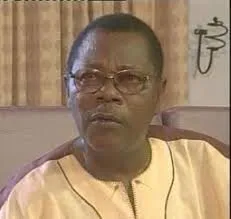
There are actors who make audiences laugh, and then there are actors who become part of a country’s cultural memory simply by being themselves on screen. Sam Loco Efe belonged firmly to the second category. Decades after Nigeria’s home video industry began churning out the films that would eventually be branded “Nollywood,” his gruff voice, deliberate comic timing, and unmistakable screen presence remain reference points for anyone discussing the genre’s formative years. He did not simply appear in popular films; he helped define what Nigerian comic acting looked like before the industry had fully figured out what it wanted to be.
What makes his story worth revisiting is not only the breadth of his filmography but the unlikely route he took to get there. Sam Loco Efe was not a young theatre graduate who walked into acting with formal training and a clear plan. He arrived at performance relatively late, after working in sales, after living through a civil war, and after years of provincial theatre work that most audiences today would never have heard about. His rise says as much about persistence as it does about talent.
Sam Loco Efe Biography
| Detail | Information |
|---|---|
| Full Name | Sam Loco Efeeimwonkiyeke |
| Known As | Sam Loco Efe |
| Date of Birth | December 25, 1945 |
| Place of Birth | Enugu State, Nigeria |
| Nationality | Nigerian |
| Ethnicity | Edo (father), Igbo (mother) |
| Occupation | Actor, Comedian, Theatre Director, Screenwriter |
| Known For | Comic roles in Nollywood films, including Tom and Jerry, Osuofia in London, and Ukwa |
| Religion | Christian (details not widely publicized) |
Early Life and Background
Sam Loco Efe was born on Christmas Day, 1945, a detail he reportedly enjoyed mentioning throughout his life. His background was a blend of two distinct Nigerian cultures. His father, Arase Efeeimwonkiyeke, was a Benin man from Edo State who had relocated to the eastern part of the country for work, while his mother was of Igbo extraction from the Udi area of present-day Enugu State and made a modest living selling akara, the fried bean cakes sold across Nigerian markets to this day. That mixed heritage, eastern in geography but western in paternal lineage, shaped much of his early life, since the family eventually settled in Abakaliki, now the capital of Ebonyi State, where young Sam Loco spent most of his childhood.
His father died while he was still in elementary school, leaving his mother to raise him largely on her own. It was not a comfortable upbringing. Money was tight, and the loss of a parent so early would have derailed many children’s prospects entirely. Instead, it appears to have pushed him toward performance as an outlet. Even as a schoolboy, he showed an interest in drama, taking part in school theatrical productions, including a memorable but unsuccessful staging of Shakespeare’s Julius Caesar at a regional arts festival in Abakaliki.
The Nigerian Civil War, which broke out in 1967, interrupted whatever plans he might have had. Like many young men from the East at the time, Efe found himself drawn into the conflict, fighting on the Biafran side. When the war ended in 1970, he made his way back to Benin City, his father’s ancestral home, a journey that would prove pivotal. It was there, in 1968 by some accounts even before the war fully concluded, that he began assembling the building blocks of a theatre career, founding the Ovonramwen Theatre Group alongside collaborators, with their debut production based on the work of playwright Ogierhiakhi.
Education
Sam Loco Efe’s formal education was modest by the standards often expected of public figures today, consisting of elementary schooling in Abakaliki before life circumstances, the death of his father and the disruption of war, interrupted any further academic pursuit. What he lacked in formal credentials, he made up for through practical, hands-on theatre experience accumulated over years of performing, writing, and directing for various stage groups. His real education came from the stage itself: workshops, rehearsals, provincial productions, and the unglamorous grind of building an audience from nothing.
Career Journey
For years, acting did not pay the bills. Efe worked various jobs, including a stint with the tyre company Dunlop in Benin City, while moonlighting in television and theatre on the side. He appeared in NTA Benin’s television series Hotel de Jordan and performed in productions like Ola Rotimi’s The Gods Are Not to Blame, gradually building a reputation within Nigeria’s theatre circles even as his day job paid the actual bills.
The real turning point came in 1977, when he finally left his sales job to pursue theatre full-time. That same year, he auditioned for and won the lead role in Langbodo, a play by the respected director Dapo Adelugba staged as part of the FESTAC ’77 cultural festival, one of the largest pan-African arts events ever held. The exposure proved valuable. Adelugba, impressed with Efe’s work, connected him with contacts at the University of Ibadan, which led to a position as a senior artiste at the institution, a role that gave him both stability and continued exposure to serious dramatic work.
By the time Nigeria’s home video boom began in the early 1990s, Efe was already a seasoned performer with decades of stage experience behind him. That experience showed. While many of his contemporaries in early Nollywood were still finding their footing in front of cameras, Efe brought the timing and discipline of a trained stage actor to roles that called for broad comedy. He became known for delivering memorable, often deliberately convoluted lines loaded with what audiences affectionately referred to as “grammar,” exaggerated, theatrical English that became something of a comic signature.
His filmography from this period is extensive, featuring appearances in titles such as Tom and Jerry (alongside the popular duo Chinedu Ikedieze and Osita Iheme), Final World Cup, Long John, Ukwa, Akidi, Ijele the Son of Masquerade, My Love, and the widely loved Osuofia in London. Few actors of his generation managed to straddle both broad slapstick and more dramatically grounded roles the way he did, and that versatility kept him in consistent demand for nearly two decades.
His contributions were formally recognized during his lifetime. He received the Best Comic Actor award at the Africa Movie Academy Awards, was named Most Promising Actor at the Africa Magic Viewers Choice Awards, and won Best Actor in a Comedy category at the City People Entertainment Awards, among other honors that cemented his standing as one of the most decorated comic performers of his era.
Influence and Contribution to Nigerian Cinema
What separates Sam Loco Efe from many comic actors is the sense, shared widely among industry observers, that he treated comedy as a craft rather than an accident. His theatre background meant he approached even broadly comic material with attention to rhythm, pacing, and characterization, elements that are easy to overlook in fast-paced, low-budget Nollywood productions but that distinguished his performances from those of less disciplined actors. He helped establish a template for Nigerian comic acting that blended exaggerated physicality with genuine narrative coherence, an approach that later comic actors in the industry would draw on, whether they acknowledged the debt or not.
He also represented a generational bridge. Having come of age in Nigeria’s pre-independence and immediate post-independence theatre scene, and having lived through the civil war, Efe carried into his Nollywood roles a kind of lived gravity that younger performers, however talented, simply could not replicate. That depth, paired with his comic instincts, gave his performances an unusual texture: funny, certainly, but never hollow.
Personal Life
Sam Loco Efe was a family man whose private life, while less publicly documented than his career, by most accounts centered on his children and his hopes for eventual retirement. He was reportedly married, and accounts of his life mention several children, including Sandra Ebun Leonardo, Bola Adesuwa Efe, Bismarck Nosa Efe, Julia Orobosa Omozusi, Precious Osariemen Efe, and Omoruyi Efe. Those close to him have noted that, in his later years, he had begun planning to retire to a farmhouse he was developing in Abakaliki, the town where he had spent much of his own childhood, a plan that circumstances ultimately prevented him from completing.
Net Worth
Precise figures for Sam Loco Efe’s net worth during his lifetime are not independently verified, and any specific dollar figure circulating online should be treated with caution. What can be said with more confidence is that he was, by the standards of Nigeria’s film industry at the time, a well-established and reasonably successful actor whose income was drawn primarily from decades of stage work, television appearances, and a substantial body of film roles across Nollywood’s most commercially active period.
A Legacy That Outlasted the Man
What stands out most, looking back on Sam Loco Efe’s career, is how much of Nollywood’s early comic identity he helped shape without ever seeming to chase that role deliberately. He was, by most accounts, simply a working actor who took his craft seriously, having come up through the harder, less glamorous world of provincial Nigerian theatre. That seriousness is precisely what gave his comedy its staying power. Performances in films like Osuofia in London and Tom and Jerry continue to circulate among Nigerian audiences today, introducing his work to viewers who were not even born during his most active years. Few actors achieve that kind of durability, and fewer still earn it through the unglamorous combination of war, financial hardship, and decades of unflashy stage work that defined Sam Loco Efe’s path to recognition.
Frequently Asked Questions
What was Sam Loco Efe known for?
He was best known for his comic roles in Nollywood films, particularly his work in titles like Tom and Jerry, Osuofia in London, and Ukwa, where his theatrical background gave his comedy a distinctive rhythm and depth.
Where was Sam Loco Efe from?
He was born in Enugu State to a father of Benin (Edo) heritage and a mother of Igbo heritage, and he was raised primarily in Abakaliki, now part of Ebonyi State.
Did Sam Loco Efe have formal theatre training?
Not in the conventional academic sense. His skills were developed through years of practical work in provincial theatre groups, television productions, and stage plays, including a notable role in the FESTAC ’77 production of Langbodo.
Was Sam Loco Efe married with children?
Yes, accounts of his life describe him as a father of several children, though detailed information about his marriage has not been extensively publicized.
What awards did Sam Loco Efe win?
He received recognition including the Best Comic Actor award at the Africa Movie Academy Awards and the Most Promising Actor award at the Africa Magic Viewers Choice Awards, among other honors from Nigerian entertainment bodies.
Disclaimer: All facts and accounts within this biography have been gathered from open-source materials. This content is offered for general informational purposes. Given the nature of public records, details may be subject to revision or correction over time.

Leave a Reply