
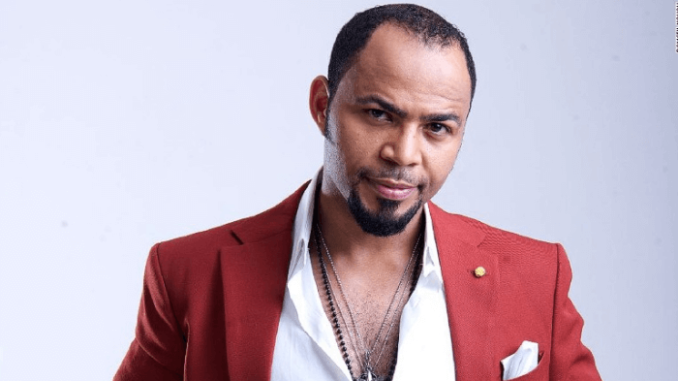
Ask any Nigerian woman of a certain generation to name the face that defined on-screen romance in Nollywood during its home-video peak, and the name Ramsey Nouah will almost certainly come up without hesitation. For years, he was the industry’s most dependable and magnetic romantic lead — the man whose on-screen chemistry could elevate any story and whose physical presence alone could fill seats. But what makes his career genuinely interesting, and genuinely admirable, is what happened after the romantic era: a deliberate and successful reinvention into directing that has proven him as talented behind the camera as he ever was in front of it. He is one of the very few Nollywood stars who have managed the transition from beloved performer to respected filmmaker without losing the credibility that comes with each.
Ramsey Nouah Biography
| Full Name | Ramsey Tokunbo Nouah Jr. |
| Date of Birth | December 19, 1970 |
| Age | 55 years old (as of 2025) |
| State of Origin | Ondo State, Nigeria |
| Nationality | Nigerian |
| Ethnicity | Yoruba-Israeli (mixed heritage) |
| Religion | Christianity |
| Wife | Emelia Philips-Nouah |
| Children | Three |
| Occupation | Actor, Director, Producer |
| Education | Studied in Nigeria |
| Net Worth | Estimated $4 million (not officially confirmed) |
| Known For | Living in Bondage: Breaking Free (dir.), Tòkunbò (Netflix dir.), AMAA Best Actor 2010, Lover Boy of Nollywood |
Early Life and Background
Ramsey Tokunbo Nouah Jr. was born on December 19, 1970, in Lagos State, though he carries Ondo State heritage on his mother’s side. His paternal lineage is Israeli — his father is of Jewish heritage — making him one of the more culturally unique figures in Nigerian public life. He has spoken openly about growing up navigating the dual currents of Yoruba and Israeli identity in Nigeria, an experience that required him to hold multiple cultural truths simultaneously from a young age. It is perhaps not a stretch to suggest that this bicultural fluency contributed to the emotional range he later brought to his performances — the ability to understand and portray complexity, to hold contradictions with grace.
He grew up in Lagos, where he received his schooling, and from early on showed the combination of physical presence and emotional availability that would later make him one of the most compelling screen presences in Nigerian cinema.
Career Journey — The Lover Boy Era
Ramsey Nouah entered Nollywood in the early 1990s and spent the next decade and a half becoming its most bankable romantic lead. Film after film, opposite the industry’s most celebrated actresses, he built a reputation for on-screen chemistry that directors could depend on and audiences would reliably pay to see. His boyish charm — the easy smile, the gentle eyes, the way he could communicate longing with minimal dialogue — made him the template against which Nollywood’s male romantic heroes were measured for an entire generation.
Fans and entertainment journalists nicknamed him the “Lover Boy of Nollywood” — a title that stuck, that he embraced with self-awareness, and that he eventually moved beyond with equal self-awareness. Part of what makes his career arc interesting is the intelligence with which he managed that transition: he did not simply age out of romantic roles or wait for younger actors to push him aside. He actively redirected his energy toward a new creative challenge, on his own terms and on his own timeline.
His acting achievements include the Africa Movie Academy Award for Best Actor in a Leading Role in 2010 — a recognition from the continent’s most prestigious film awards body that validated the depth behind the charm. He had demonstrated over years of work that he was not simply attractive on screen but genuinely skilled as a dramatic performer, capable of carrying morally complex characters with authenticity and subtlety.
The Transition to Directing
The second, and perhaps more historically significant, chapter of Ramsey Nouah’s career began when he moved into directing. His first major directorial project was ’76 — a historical drama set during Nigeria’s 1976 coup attempt, starring Rita Dominic among others. The film was widely praised for its production quality, its historical authenticity, and its mature, restrained handling of a politically sensitive period in Nigerian history. Coming from a man known primarily as a romantic lead, it announced a fundamentally different creative intelligence and level of ambition.
He followed this with Living in Bondage: Breaking Free (2019) — the sequel to Living in Bondage, one of Nollywood’s most iconic films from the early 1990s. The original film was foundational to the Nollywood home-video era; producing a credible sequel decades later was a task fraught with expectation and the risk of alienating nostalgic audiences. Ramsey’s version was a commercial and critical success. It introduced the Living in Bondage universe to a new generation while honouring what made the original so culturally significant, and it established him as a filmmaker capable of managing large-scale productions with both commercial and artistic intelligence.
More recently, he directed the Netflix original series Tòkunbò (2024) — a fast-paced action thriller starring Chidi Mokeme as an underworld boss. The series, available to global Netflix subscribers, further extended his reach into the streaming era and confirmed his relevance as a creative force for a new generation of Nollywood audiences.
Net Worth
Ramsey Nouah’s estimated net worth is approximately $4 million, reflecting three decades of acting fees, directing and producing credits, brand endorsements, and the accumulated commercial value of a career at the top of Nigerian cinema. Entertainment publications consistently place him among the top 10 richest Nollywood actors and actresses as of 2025–2026. These figures are estimates and not officially confirmed.
Personal Life
Ramsey Nouah is married to Emelia Philips-Nouah, and together they have three children. He has maintained a notably private family life despite his extraordinary fame — a deliberate and admirable choice in an industry where personal life is increasingly treated as content. He has spoken publicly about the importance of protecting his family from the more intrusive aspects of celebrity culture, and his consistency in this regard has earned respect across the Nigerian entertainment community.
What Ramsey Nouah’s Career Teaches About Reinvention
The story of Ramsey Nouah’s transition from romantic lead to director is worth dwelling on because it is genuinely instructive for anyone in a career built on a particular persona. Being “the Lover Boy” was a commercially powerful identity — it guaranteed audiences, drove film financing, and kept his name in demand for years. But it also had limits: romantic leads age out of their most commercially valuable roles, and actors who rely entirely on persona rather than building genuine craft end up with diminishing relevance as they age.
Ramsey avoided that fate by refusing to be defined by his most marketable characteristic. He studied directing, built his technical knowledge quietly, and waited until he had a project worthy of his ambitions before making his directorial debut public. ’76 and then Living in Bondage: Breaking Free were not experiments; they were fully formed, commercially successful, critically respected films. The patience and preparation behind that transition is itself a kind of masterclass in career management.
Ramsey Nouah on Nigerian Cinema’s Global Future
In various interviews over the past decade, Ramsey Nouah has spoken about his belief in the global potential of Nigerian cinema — not merely as a niche interest for diaspora audiences, but as mainstream entertainment that can compete internationally on production quality, narrative depth, and commercial appeal. His directorial work has been shaped by that conviction: Living in Bondage: Breaking Free was produced with cinema-quality production values and international storytelling sensibilities while remaining thoroughly Nigerian in its themes and context. His Netflix collaboration with Tòkunbò placed him in the global streaming ecosystem. He is building toward a career as one of Nollywood’s defining filmmaker-directors, and the early evidence suggests he will succeed.
Ramsey Nouah’s Enduring Appeal to Nigerian Women
Part of what made Ramsey Nouah’s romantic lead career so commercially powerful was the specificity of his appeal to Nigerian women — a demographic that was, and remains, the primary driver of Nollywood’s domestic box office. He possessed a combination of qualities that the Nigerian romantic hero archetype requires but rarely finds in a single package: physical attractiveness, emotional expressiveness, the ability to be vulnerable without losing masculine credibility, and the kind of steady, reassuring screen presence that makes audiences feel safe investing emotionally in the outcome of a story. His eye contact with the camera, and with his co-stars, communicated genuine attention in a way that felt personal rather than performed. That quality is nearly impossible to teach, and it was the foundation of a decade of commercial dominance in Nollywood’s romantic genre.
Frequently Asked Questions
How old is Ramsey Nouah?
He was born on December 19, 1970, making him 55 years old as of 2025.
Why is Ramsey Nouah called the Lover Boy?
The nickname emerged from his decade-long run as Nollywood’s most celebrated romantic lead — the industry’s defining on-screen romantic hero for an entire generation.
What films has Ramsey Nouah directed?
His major directorial works include ’76, Living in Bondage: Breaking Free (2019), and the Netflix series Tòkunbò (2024).
What award did Ramsey Nouah win at AMAA?
He won the Africa Movie Academy Award for Best Actor in a Leading Role in 2010.
Who is Ramsey Nouah’s wife?
His wife is Emelia Philips-Nouah. They have three children together and have maintained a private family life despite his public fame.
Disclaimer: All facts and accounts within this biography have been gathered from open-source materials. This content is offered for general informational purposes. Given the nature of public records, details may be subject to revision or correction over time.
Leave a Reply