
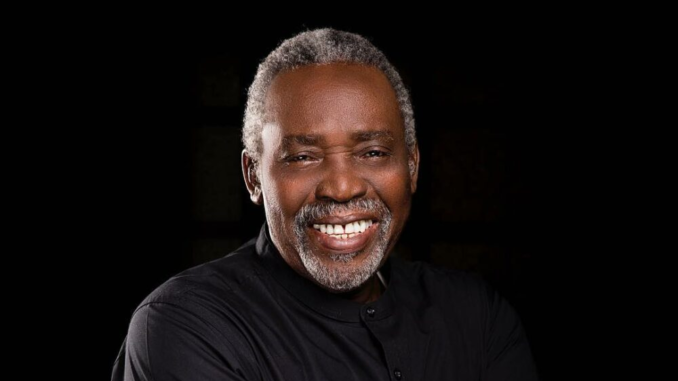
The name Olu Jacobs carries a weight in Nigerian cultural life that very few actors can claim. He is one of the extremely small number of performers from Nigeria to have built a substantial career on British television and stage before Nollywood even existed as a concept — and then to have become a foundational figure in that same Nollywood when it rose to prominence. He trained in London at one of the world’s most prestigious drama schools, appeared in BBC productions during an era when that was an extraordinary achievement for a Nigerian-born actor, and returned home to become one of the most respected presences in the country’s film industry. His career is, in the truest sense, transgenerational — a bridge between the pre-Nollywood era of formal theatrical training and the explosive popular cinema that followed.
Olu Jacobs Biography
| Full Name | Olusegun Oluwole Anthony Jacobs |
| Date of Birth | July 14, 1942 |
| Age | 83 years old (as of 2025) |
| State of Origin | Kogi State, Nigeria |
| Nationality | Nigerian/British |
| Ethnicity | Yoruba (Ijumu, Okun subgroup) |
| Religion | Christianity |
| Wife | Joke Silva (actress) |
| Children | Two sons |
| Occupation | Actor, Producer |
| Education | London Academy of Music and Dramatic Art (LAMDA) |
| Known For | AMAA Best Actor 2007, British TV/theatre career, marriage to Joke Silva |
Early Life and Background
Olu Jacobs was born on July 14, 1942, in Kogi State, Nigeria — a state that sits at the confluence of the Niger and Benue rivers, one of the most geographically significant points in West Africa. His roots are Yoruba, specifically from the Ijumu people of the Okun subgroup — a smaller Yoruba community that maintains its own distinct cultural practices within the broader Yoruba tradition.
He grew up with a passion for performance that was apparent early and that his circumstances did not easily accommodate. Nigeria in the 1940s and 1950s offered limited formal theatrical training, and the path to serious dramatic education ran through Britain — a journey that required resources, determination, and a willingness to leave home for an extended period. Olu Jacobs made that journey, and it shaped everything that followed.
Training in London
Olu Jacobs trained at the London Academy of Music and Dramatic Art (LAMDA) — one of Britain’s most prestigious and rigorous drama schools, which has produced an extraordinary range of distinguished alumni across the global theatre and film industry. LAMDA training in the mid-20th century was classical, demanding, and comprehensive: it covered voice, movement, Shakespeare, contemporary drama, and the full technical vocabulary of the European theatrical tradition. For a young Nigerian actor in London, it was both an education and an assertion — proof that his talent and discipline could meet the most demanding international standards.
He built his early career in Britain, working in theatre and television through the 1960s, 1970s, and 1980s. BBC productions, stage plays, and various television appearances made him a working professional in an environment where black African actors faced significant structural barriers to substantive roles. His success in that environment — limited though the opportunities were by the racism of the era — required exceptional talent, persistence, and a refusal to accept that his background should define his ceiling.
Career in Nigeria and Nollywood
When Olu Jacobs returned to Nigeria and began contributing to Nollywood as it grew through the 1990s and 2000s, he brought with him something no other actor in the industry possessed in quite the same combination: LAMDA training, decades of professional experience in the British theatrical and television tradition, and the moral authority that comes from a life lived with visible integrity and discipline.
He became one of Nollywood’s most respected senior figures almost immediately — not because of star power in the conventional sense, but because of the quality and consistency of his work. He was cast regularly in roles requiring gravitas, wisdom, and command — patriarchs, rulers, judges, priests — roles that demanded an actor who could carry cultural weight without reducing it to performance. His work alongside virtually every major name in Nollywood across multiple generations makes him a living thread through the industry’s entire modern history.
In 2007, he won the Africa Movie Academy Award for Best Actor in a Leading Role — adding a major continental industry honour to his already distinguished career. The recognition, coming relatively late in a career already long and full, felt like the right kind of validation: not a consolation prize for years of work, but a genuine acknowledgment from a serious awards body that he remained among the finest performers active in African cinema.
Olu Jacobs and Joke Silva — Nollywood’s Most Admired Marriage
Olu Jacobs is married to actress Joke Silva, and their partnership is widely regarded as one of the most admired and enduring in Nigerian entertainment. They are a couple who share a professional world as well as a private one — both are serious actors with long and distinguished careers — and the mutual respect that comes through in their public interactions has made their relationship a model that many in the industry aspire to.
Together they have two sons. In recent years, Joke Silva has spoken publicly about her husband experiencing health challenges associated with his age, and the Nigerian entertainment community has rallied warmly around them. The outpouring of affection and respect from colleagues and fans has been a reflection of how deeply both are valued by the industry they have served so well for so long.
Olu Jacobs and the British Theatre Tradition
Olu Jacobs’ training at LAMDA placed him within one of the world’s most demanding classical theatrical traditions. The British approach to actor training — with its emphasis on voice production, physical control, textual analysis, and the full vocabulary of European dramatic convention — gave him a technical foundation that most Nigerian actors of his generation simply did not have. When he returned to Nigeria and began working in film, he brought with him a different understanding of what performance could accomplish: more controlled, more technically deliberate, more conscious of the relationship between internal emotional truth and external physical expression.
This technical sophistication is part of what makes his screen presence so distinct. There is never a wasted gesture, never an arbitrary vocal inflection. Everything he does on screen — a raised eyebrow, a pause before speaking, the angle at which he holds his head — is considered. That control is not coldness; it is craft. And it is the direct product of the rigorous training he received in London more than half a century ago.
The Legacy of a Long Marriage in Public Life
The partnership between Olu Jacobs and Joke Silva deserves consideration as a cultural legacy in its own right. In an entertainment industry that frequently produces short, volatile romantic relationships and public breakups, they have built and maintained a decades-long marriage with visible warmth, mutual respect, and genuine partnership. They have worked in the same industry, navigated the same professional pressures, and chosen to remain together through the inevitable complications of long public lives. For young Nigerian entertainers navigating their own personal and professional lives, the Jacobs-Silva relationship is a model that many aspire to, even if few achieve it.
Olu Jacobs and the Question of African Representation in British TV
Olu Jacobs built his British career during a period when black African actors faced structural barriers in British television and theatre that were significant and rarely discussed publicly. The parts available were often limited and stereotyped, and the expectation that black performers would assimilate to a particular kind of representation was pervasive. That Olu Jacobs managed to build a working professional career in that environment — appearing in BBC productions, on stage, and in television drama — is itself a testament to his talent, persistence, and the kind of quiet refusal to accept diminished ambition that characterises the best actors of any background. His success in Britain before Nollywood existed is one of the most underappreciated achievements in Nigerian entertainment history.
Olu Jacobs and the Tradition of the Elder Statesman in Nigerian Film
There is a tradition in Nigerian cinema — and in Nigerian culture more broadly — of the elder statesman: the figure whose wisdom, experience, and moral authority anchor the community’s understanding of itself. Pete Edochie embodies this archetype through the Okonkwo legacy; Olu Jacobs embodies it through the accumulated weight of a uniquely cosmopolitan career that spans continents, decades, and traditions. His presence in a Nollywood production signals seriousness — it tells audiences that the filmmakers considered their project worthy of his participation, and that signal carries weight. In this sense, he is not simply a performer; he is a quality indicator, a cultural endorsement that younger actors and new productions benefit from by association.
Frequently Asked Questions
How old is Olu Jacobs?
He was born on July 14, 1942, making him 83 years old as of 2025.
Where did Olu Jacobs receive his acting training?
He trained at the London Academy of Music and Dramatic Art (LAMDA) in the United Kingdom.
Who is Olu Jacobs’ wife?
His wife is actress Joke Silva. They are considered one of Nollywood’s most iconic and admired couples.
What award did Olu Jacobs win at AMAA?
He won the Africa Movie Academy Award for Best Actor in a Leading Role in 2007.
What is Olu Jacobs’ ethnicity?
He is Yoruba (Ijumu/Okun) from Kogi State, Nigeria.
Disclaimer: All facts and accounts within this biography have been gathered from open-source materials. This content is offered for general informational purposes. Given the nature of public records, details may be subject to revision or correction over time.
Leave a Reply