
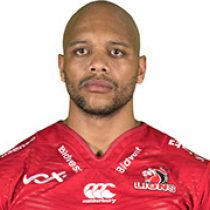
Few South African backline players have managed to stay relevant across as many different teams and competitions as Lionel Mapoe. Over a professional career spanning more than fifteen years, he moved between the Cheetahs, the Lions, the Bulls, and French rugby, earning Springbok caps along the way and eventually retiring as one of the more durable and adaptable utility backs of his generation.
Lionel Mapoe Biography
| Detail | Information |
|---|---|
| Full Name | Grenton Lionel Starlone Mapoe |
| Date of Birth | July 13, 1988 |
| Place of Birth | Port Elizabeth, South Africa |
| Nationality | South African |
| Height | 1.82 m (5 ft 11½ in) |
| Occupation | Former Professional Rugby Union Player (Centre/Winger) |
| Known For | Springbok caps; Currie Cup and Super Rugby titles with the Bulls |
| Education | Hoërskool Fichardtpark |
Early Life and Background
Lionel Mapoe, born Grenton Lionel Starlone Mapoe on July 13, 1988, in Port Elizabeth, attended Hoërskool Fichardtpark in Bloemfontein, where his rugby talent first became apparent at school level. His path into professional rugby followed a fairly traditional South African route, progressing through provincial youth structures before earning his first senior contract.
Career Journey
Mapoe began his senior career with the Free State Cheetahs, whom he represented eighteen times during his three years in the union’s youth and senior structures. He made his senior debut for the Cheetahs in the 2008 Currie Cup before earning a place in the Cheetahs’ Super Rugby squad in 2010, making his debut in that competition against the Bulls in the opening round of the season, the very team he would later represent for several years in the latter stages of his career.
In 2011, Mapoe made the move to the Lions, a transfer that marked the beginning of the most extensive and successful period of his career. He represented the union across multiple competitions, including Super Rugby with the Lions and the Currie Cup with the Golden Lions, from 2011 through 2019, with a brief loan interruption to the Bulls in 2013 following the Lions’ relegation that season. His performances during the 2015 Super Rugby season proved particularly significant, catching the attention of national selectors and resulting in his first call-up to the Springbok squad for that year’s Rugby Championship, putting him in genuine contention for a place in South Africa’s 2015 Rugby World Cup squad. Prior to this senior international recognition, he had already represented South Africa at Under-20 level and with the national Sevens program, experience that had given him a useful international grounding before his senior Test debut.
Mapoe’s rugby career also took him beyond South Africa’s borders. Between 2015 and 2018, he spent time with Japanese club Kubota Spears, gaining experience in one of Asia’s most competitive domestic rugby environments, before returning to French rugby with Stade Français for the 2019-20 season and later signing for Nice ahead of the 2020-21 campaign, joining the club from Stade Français as a three-quarter international centre with fourteen senior Test caps to his name at the time.
He returned to South African rugby in 2021, signing with the Blue Bulls and Bulls, where he would close out his career. This proved to be a successful final chapter; Mapoe was part of the Bulls squad that won the Currie Cup and Super Rugby Unlocked titles, with the 2021 Currie Cup triumph standing out as a particular highlight that he later described as one of the most special moments of his career.
Mapoe announced his retirement from professional rugby in October 2024, posting a heartfelt message to the Bulls organization on social media, thanking the coaches, players, and staff who had supported him during his time at the union and reflecting on the relationships built over the course of his career.
International Career
Mapoe earned 14 caps for the Springboks between 2015 and 2018, with his final appearance for the national team coming in 2018. While he never quite became a fixture of the matchday squad across multiple World Cup cycles, his recall to the national team in 2018 reflected the consistency he maintained at provincial and franchise level throughout a career that spanned more than a decade at the top level of South African rugby.
Playing Style
Mapoe was known throughout his career for his versatility, capable of playing centre, wing, or fullback depending on what his team required. That adaptability made him a valuable squad option across every team he represented, and it likely contributed to his unusually long career, spanning the Cheetahs, the Lions, Japan, France, and ultimately the Bulls, where he became a respected veteran presence in the squad’s backline rotation.
Personal Life
Public details regarding Lionel Mapoe’s personal life beyond rugby remain relatively limited in available records. Following his retirement announcement in 2024, there were reports of a potential boxing match being arranged against a fellow former Springbok, an indication of his continued connection to South Africa’s broader sporting and entertainment circles even after stepping away from professional rugby.
Net Worth
Specific figures for Lionel Mapoe’s net worth have not been independently verified or publicly disclosed. His earnings, accumulated over more than fifteen years across South African provincial rugby, Japanese club rugby, and the French Top 14, would reflect a substantial and sustained professional rugby career, though no confirmed total figure is available.
Navigating South African Rugby’s Competitive Landscape
Mapoe’s career trajectory, moving between the Cheetahs, the Lions, the Bulls, and international stints in Japan and France, reflects a broader pattern common among South African backs who do not establish themselves as immovable starters at a single elite franchise early in their careers. South Africa’s depth at centre and wing has historically been considerable, with the country regularly producing more Test-quality backline talent than its national team structure can accommodate at any given time. Players in Mapoe’s position often face a choice between accepting a squad rotation role at a top-tier franchise or seeking more consistent first-team rugby, and often better financial terms, at a slightly less prominent union or abroad.
Mapoe’s decision to spend time with Kubota Spears in Japan’s domestic league between 2015 and 2018 reflects this broader trend among South African players during that period, as Japanese club rugby increasingly offered competitive salaries and a genuine opportunity to continue developing as a player outside the South African system’s intense competition for places. His subsequent moves to Stade Français and Nice in France similarly placed him within Europe’s well-resourced club rugby economy, before his eventual return to South Africa and the Bulls, where he found the team success that had occasionally eluded him earlier in his career.
A Career Defined by Adaptation
What stands out when reviewing Mapoe’s full career arc is the consistency with which he adapted to new environments without ever appearing to lose his place within South African rugby’s broader conversation. Few players manage spells at four different major unions, two seasons in Japan, two seasons in France, and Springbok recognition, all within a single career, and Mapoe’s ability to do so while also finishing his playing days with genuine team silverware at the Bulls speaks to both his professionalism and his enduring value as a squad option wherever he played.
Conclusion
Lionel Mapoe’s career stands as a testament to longevity built on versatility rather than a single standout skill. Across more than fifteen years and stints in South Africa, Japan, and France, he remained a consistently useful and adaptable player, culminating in genuine team success with the Bulls before his retirement in 2024. His Springbok caps, earned during a competitive period for South African backline selection, remain the clearest marker of a career built on steady, reliable performance across multiple positions and multiple rugby cultures.
Frequently Asked Questions
When did Lionel Mapoe retire from rugby?
He announced his retirement from professional rugby in October 2024, following his final years with the Bulls.
How many Springbok caps did Lionel Mapoe earn?
He earned 14 caps for South Africa between 2015 and 2018.
Which positions did Lionel Mapoe play?
He played primarily as a centre or winger, valued for his versatility across the backline.
Which clubs did Lionel Mapoe play for?
His career included the Cheetahs, the Lions, Kubota Spears in Japan, Stade Français, Nice, and the Bulls.
What titles did Lionel Mapoe win with the Bulls?
He was part of the Bulls squad that won the Currie Cup and Super Rugby Unlocked, with the 2021 Currie Cup title standing out as a particular career highlight.
Disclaimer: All facts and accounts within this biography have been gathered from open-source materials. This content is offered for general informational purposes. Given the nature of public records, details may be subject to revision or correction over time.

Leave a Reply